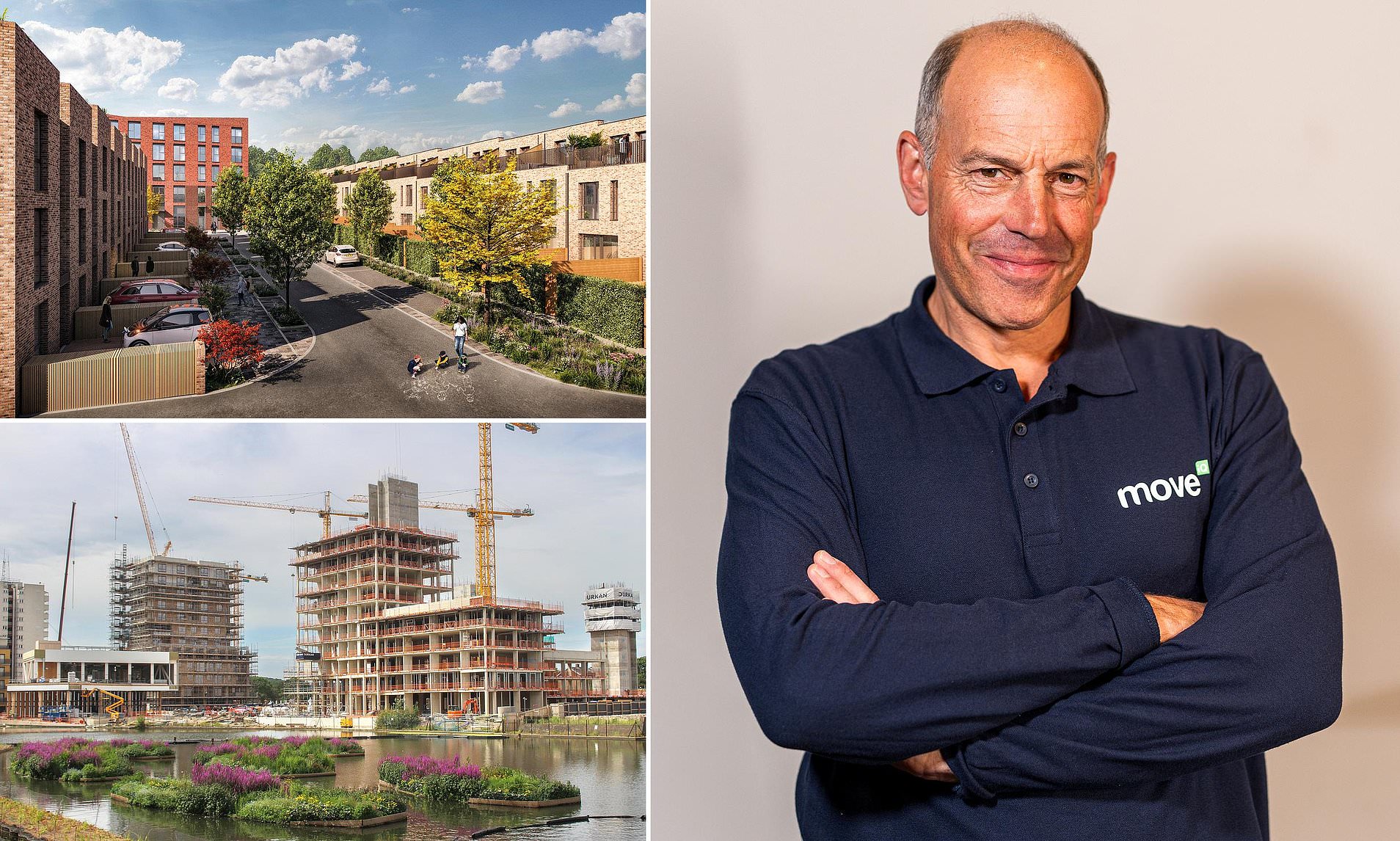
Earlier this week, the Government announced plans to create a wave of new towns across Britain.
Seven sites have been earmarked for development. Each one will comprise at least 10,000 homes, and some up to 40,000.
The sites are spread across the country, from south Gloucestershire in the west, to Thamesmead and Enfield in London, and Manchester and Leeds in the north.
The housing department says the new towns will be well-connected new communities with jobs, schools, green space and transport links planned from the start. But which one will be the best place to live?
This is Money has spoken to Phil Spencer co-presenter of the Channel 4 show, Location, Location, Location and founder of the property advice website Move iQ to find out which new town he likes the most and what one he’d be steering clear of.
Nick Maud, lead analyst at the Connells Group of estate agents, also gives us his view on the towns and where prices are likely to rise the most over the coming years.
Tempsford, Bedfordshire
How many homes: 40,000
Nearest city: Cambridge
Transport links and commute: The nearest train station is Sandy, which is an eight minute (four mile) car journey. From Sandy, it’s a 49 minute direct commute into London St Pancras.
However, the new town will be built around a new east-west rail station, linking residents to Cambridge, Oxford, London and Milton Keynes.
What’s the area like? At present, Tempsford is just a little village in the Bedfordshire countryside.
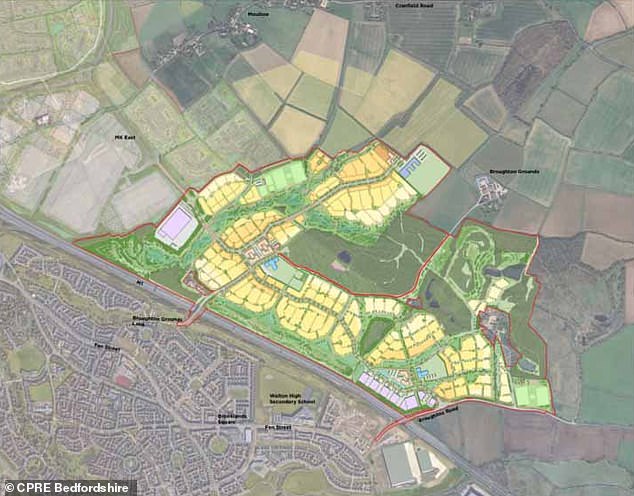
The new town will be built on previously developed land at the old Tempsford Airfield.
It will be located close to the River Ouse and River Ivel, creating plenty of scenic walks and fishing spots.
It also boasts the Bromham Lake Nature Reserve, Bedford River Valley Park and Sandy Warren, a nature reserve managed by the Wildlife Trust.
Bedford is about 30 minutes drive west, while Cambridge is a 40 minute drive north east.
It is within what’s known as the Oxford to Cambridge Growth Corridor, which the a hub for science and technology businesses which has received Government investment.
House prices: Tempsford is located in Central Bedfordshire. The average property value in the area is £358,000, according to the latest Land Registry data with prices having increased by £10,000 over the last year. This suggests it is a market where sellers have the upper hand at the moment – albeit only slightly.
| Town | House price growth |
|---|---|
| Leeds South Bank | 12.5% |
| Manchester Victoria North | 10.9% |
| Brabazon and the West Innovation Arc | 5.1% |
| Tempsford | 4.1% |
| Milton Keynes | 3% |
| Thamesmead | 0.5% |
| Crews Hill and Chase Park | 0.5% |
| Source: Hamptons |
Phil Spencer’s verdict: A giant dormitory town?
If your only criteria for choosing locations is to pick spots on the map where road and rail links meet, Tempsford is a winner. But by every other measure, it’s a poor choice.
The Bedfordshire village sits right on the A1, and it’s due to get a spanking new rail station with direct train services to London, Oxford and Cambridge.
Ironically it’s just 25 miles from my top choice Milton Keynes, but Tempsford fails where MK succeeds – its balance between homes, people and jobs is wrong.
It’s currently home to just 600 people, with none of the infrastructure or jobs that Milton Keynes has, so successfully building over 40,000 new homes on virgin territory will be a huge ask.
While a disused airfield could provide some of the land required, such a massive development is likely to require the compulsory purchase of swathes of farmland.
And while the plans envisage the creation of a technology campus next to the new east west rail station, many residents would have to commute to work, meaning Tempsford could end up being little more than a giant dormitory town rather than a genuine new town.

Crews Hill and Chase Park, Enfield
How many homes: 21,000
Nearest city: London
Transport links and commute: Crews Hill train station offers a 40 minute journey into Moorgate station in London. Also nearby, Enfield Chase Station has a slightly shorter 34 minute commute into Moorgate.
What’s the area like: Being located in Enfield in north west London means that people who buy here will have all the events and culture of the capital at their doorstep.
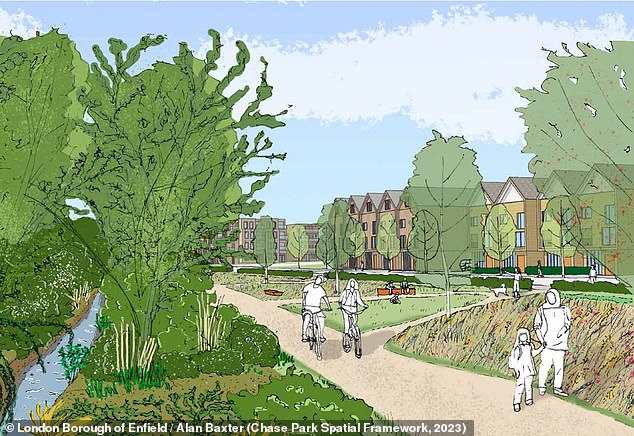
The development will promote sustainable travel, such as walking, cycling, public transport, or other sustainable modes such as car shares. It will also include GP surgeries, schools, and leisure facilities.
A new 2,471 acre wetlands will be created with new ponds and walking routes.
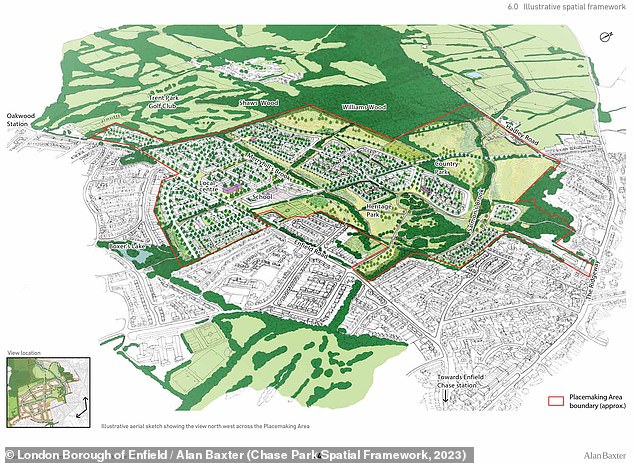
Crews Hill already enjoys a range of natural features, including brooks, valleys, woodlands, open grassland.
There is the Hilly Fields Park as well as garden centres, a golf course, the Plough Pub and the Whitewebbs Museum of Transport.
House prices: The average property in the local area of Enfield is worth £472,725, according to the latest Land Registry stats.
But prices have actually fallen by almost £2,000 on average over the past 12 months suggesting it may be a good market for buyers.
Nick Maud’s verdict: House prices won’t grow
Hamptons has forecast little to no house price growth for London between now and the end of 2028. I’m inclined therefore to place this town as my least favourite.
Crews Hill and Chase Park represent an ambitious extension of urban Enfield into rural land that feels more like neighbouring Hertfordshire.
Nevertheless, the plot is still bordered by the heavy concrete infrastructure of the M25, which may well be audible to residents.
And while Crews Hill station connects with Moorgate, professional commuters may find the average 40-minute journey somewhat long for London, particularly given that there are more convenient destinations in the city.
Leeds South Bank, West Yorkshire
How many homes: 20,000
Nearest city: Leeds
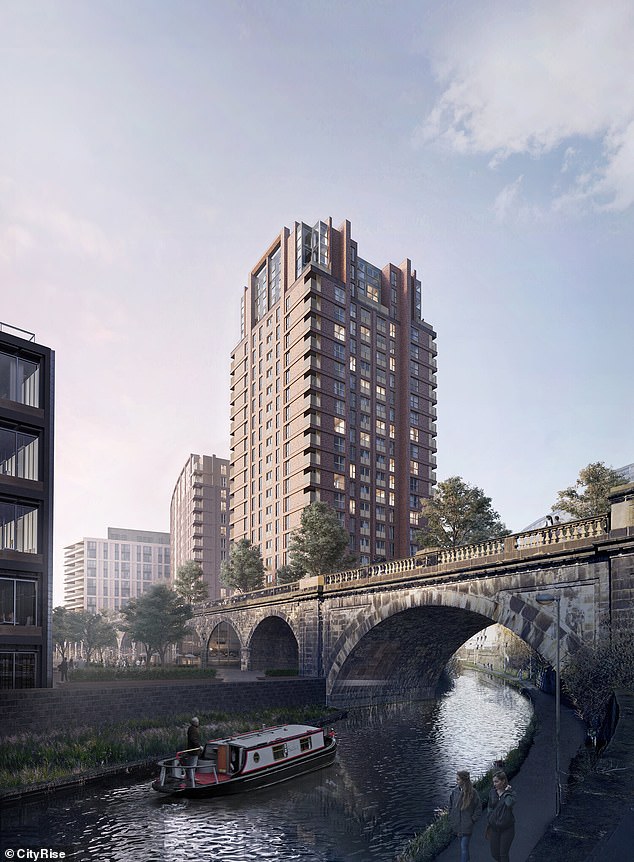
Transport links and commute: Some £2.1billion of new infrastructure is being built, including a new bridge and public transport, to connect the district to the city centre.
Leeds City Station is a five to 10 minute walk away from the district’s fringes.
Journeys to London will take around two hours and 15 minutes while Manchester can be reached in under an hour.
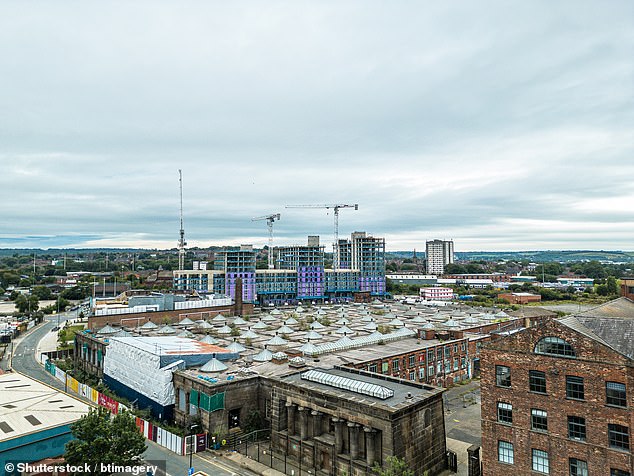
What’s the area like: The South Bank regeneration is the main development project in Leeds. It is located south of Leeds’ River Aire and the river will pass through the development and be surrounded by green space.
It also includes Aire park, with hundreds of new trees and outdoor event space, including an amphitheatre.
Overall, Leeds is Britain’s third biggest city and has a digital sector that is arguably growing faster than anywhere else in the country.
Companies with offices in Leeds include Burberry, Reed Smith and Perform Group.
Channel 4 is also about to establish a landmark digital creative unit in the city, which could create 1,200 jobs.
House prices: The average property in Leeds is worth £246,300, according to the Land Registry. Prices have risen by almost £10,000 on average over the past year suggesting it remains a seller’s market for the most part.
Nick Maud: Top pick for jobs and cheaper homes
My top vote of all the new towns would go to the South Bank regeneration area in Leeds, the North of England’s largest city by population size and fourth largest by GDP.
The large scale, mixed-use project has been underway for just over a decade and there is clear commitment to it on both a local and national level.
The area’s industrial heritage lends it a distinctive character which many buyers will find appealing. The Tetley Gallery, Tower Works and Temple Works are all examples of listed buildings that are set to be given a new lease of life.
The South Bank itself is being positioned as an employment hub, with a plan for 35,000 jobs to be created within the digital and professional services sectors by 2028.
According to Hamptons’ regional forecasts, published at the end of 2025, Yorkshire and the Humber is set to benefit from house price growth of 12.5 per cent over the four-year period 2024 to 2028, compared with 8.2 per cent for Britain as a whole.
This is underpinned by relatively accessible property prices and supported by strong demand in and around employment centres.

Thamesmead, Greenwich
How many homes: 15,000
Nearest city: London
Transport links and commute: Abbey Wood station on the Elizabeth Line is a 15 to 30 minute walk away. It’s possible to get from Abbey Wood to London Liverpool Street by train in 20 minutes.
However, the new site may also benefit from a planned Docklands Light Railway extension that will give it its vown station and direct access into Canary Wharf and Bank.
What’s the area like: Thamesmead certainly has a mixed reputation, with the wider area having been chosen as the dystopian setting for the 1971 Stanley Kubrick film A Clockwork Orange.
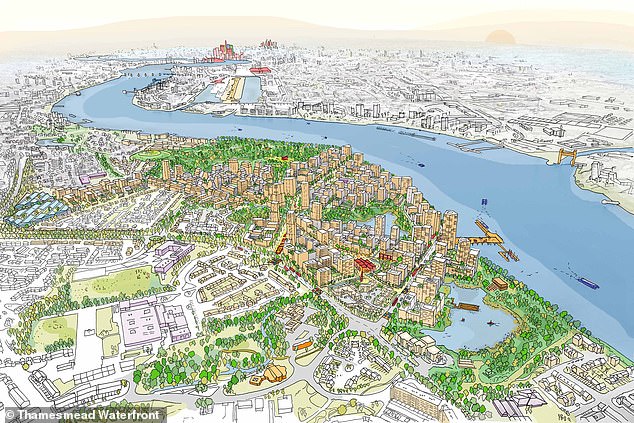
It’s not all bad, though. The riverside site that will be developed under the new plans spans across 247 acres on the southern bank of the river.
With its numerous lakes, acres of open spaces, nature reserves, riverbanks and 30,000 trees, Thamesmead is a haven for nature lovers, according to Visit Greenwich, and for runners and walkers there is the Thames path..
Thamesmead has a year-round programme of performance art, theatre and cultural events. New residents will also benefit from its close proximity to Greenwich, home to the 19th century ship, the Cutty Sark, the National Maritime Museum, and the Old Royal Naval College.
House prices: The average property in Greenwich fetches £477,909 and despite many areas of London seeing property prices fall in recent years, Greenwich has bucked the trend.
Homes are worth roughly £10,000 more than a year ago.
Nick Maud: Nice views – but no price growth
Hamptons forecast price growth of just 0.5 per cent for London between 2024 and 2028. As such, I’m inclined to place Thamesmead among my lowest rankings.
However, plans for Thamesmead are more advanced than Crews Hill and Chase Park, with spades already in the ground for the first phases.
Iconic views of the Thames and closer proximity to London’s employment centres, as well as London City Airport, edge this scheme into penultimate position.
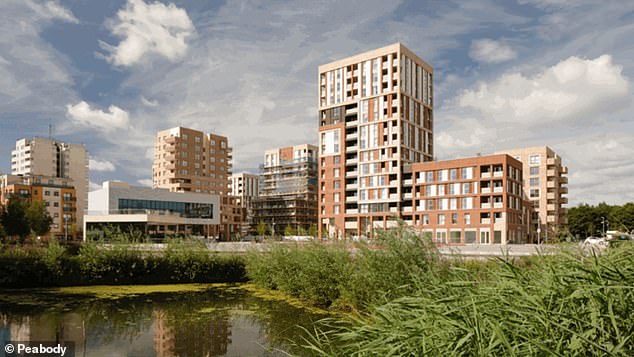
Manchester Victoria North, Greater Manchester
How many homes: 15,000
Nearest city: Manchester
Transport links and commute: The development will be within walking distance of Manchester Victoria station, which has trains going direct to Leeds and Liverpool.
Manchester Piccadilly is a little further away but it has direct trains to London lasting about two hours 15 minutes.
As part of the regeneration, there will be a new Metrolink stop connecting residents to jobs and other rail links across the city.
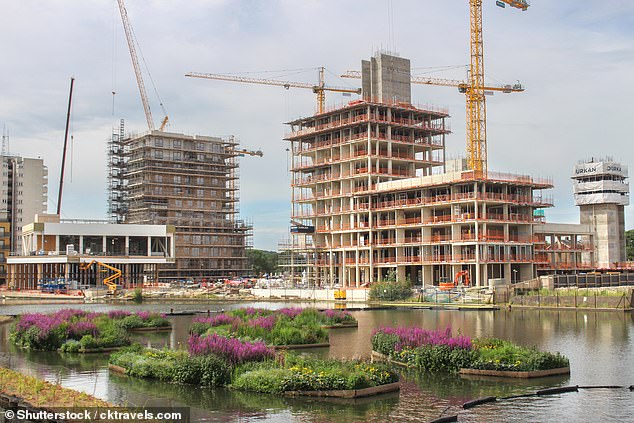
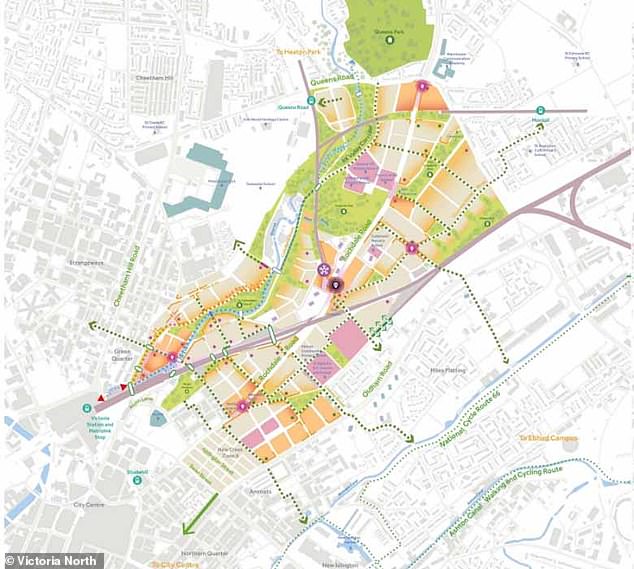
What’s the area like: This is being billed as the north of England’s biggest urban regeneration project.
Victoria North will be set across 155 hectares and seven neighbourhoods and built over the next 20 years.
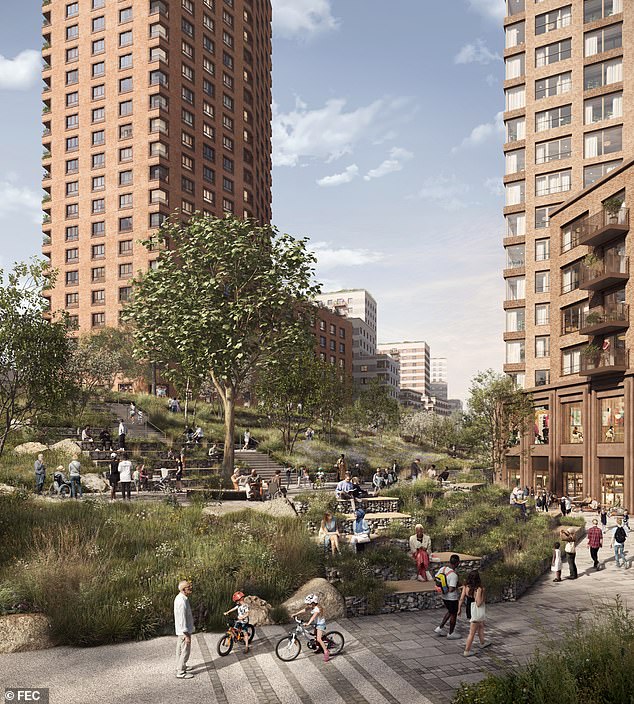
At the heart of the regeneration is the City River Park, which will become one of Manchester’s largest city centre green spaces.
Manchester also has the feel of a city very much on the up at the moment. Its population continues to grow, jobs keep getting created and homes keep being built.
The city is well-known for its young and vibrant population, bars, cafes and restaurants.
A strong jobs market, good transport links, rich cultural scene, and ongoing urban regeneration make it an attractive location and the city centre population is forecast to grow by 200,000 in the next few years.
Many major companies have offices in Manchester including Barclays, Booking.com, Siemens, Deloitte and, in neighbouring Salford, the BBC.
House prices: The average property in Manchester is worth £253,577, up from £242,975 a year ago suggesting the market is tipped in favour of sellers.
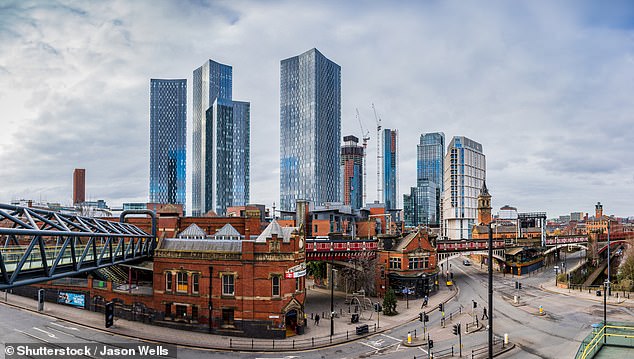
Phil Spencer: An unloved area with great potential
Manchester Victoria North has strong potential and ticks a lot of boxes.
Firstly it scores highly in the regeneration stakes – it’s due to be built mostly on brownfield land and the plans include the creation of a huge new park along with seven distinct neighbourhoods.
This sounds like a great way to inject new life into an unloved and derelict corner of Manchester’s glorious industrial past.
Demand for homes in Manchester is high, and current supply can’t keep up in many areas.
That’s why average prices in the city rose by 4.4 per cent in the year to January, four times faster than the average for England.
An injection of good quality homes is clearly needed, and the strength of demand means these new homes could attract buyers from across the North West, drawn to Manchester’s bright lights and job prospects.
Nick Maud: Good for green space and jobs
Manchester Victoria North has strong prospects for success. Hamptons has forecast double-digit growth of 10.9 per cent for the North West of England over the period 2024-28.
The district represents an effective expansion to the centre of Britain’s second largest city by economic heft.
The new green space also will be particularly appealing for new residents, especially those with young families.
New hotels around Manchester Victoria and improved links to Manchester City Airport will also encourage further commercial activity, both from elsewhere in the country and abroad.
Developer The Far East Consortium, which is spearheading the £4 billion project, has over a decade’s experience operating in the UK and already have a firm footprint in Manchester, which is great news.
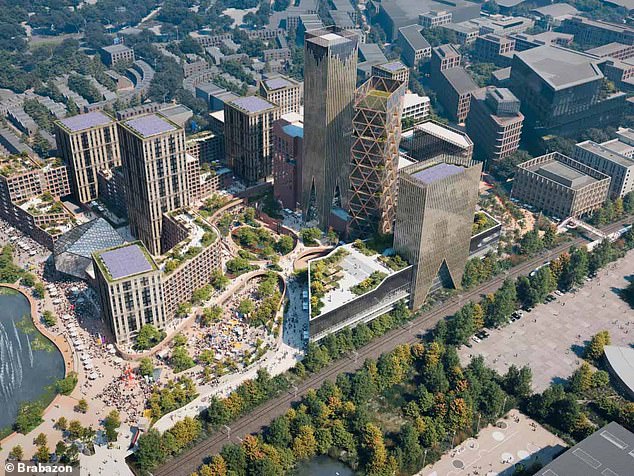
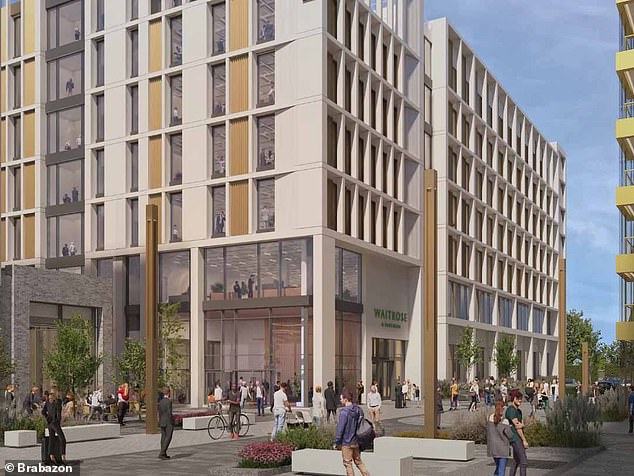
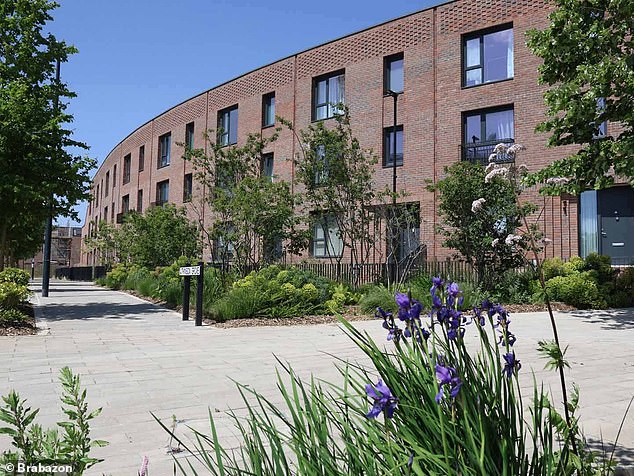
Brabazon and the West Innovation Arc, South Gloucestershire
How many homes: 40,000
Nearest city: Bristol
Transport links and commute: Closest train stations are currently Bristol Parkway and Patchway.
Bristol Parkway is a 10 minute drive from the development, and the train to Temple Meads takes another ten minutes. London is reachable in one hour and 20 minutes.
More than £100million is being invested in local infrastructure which includes a new railway station and bus service. The Brabazon train station is expected to run an hourly service into Bristol Temple Meads.
What’s the area like: Brabazon is anticipated to be completed by autumn this year with further development expected over the next 10 years.
Additional cycle paths and walking routes are set to be added. There will be three new schools as well as ‘community facilities to support lifelong learning,’ according to developer YTL.
The mega-town will also boast a live entertainment facility which is big enough to host 20,000 people.
Built on the former Filton Airfield which was the birthplace of Concorde, it will include an aerospace-themed digital entertainment hub, as well as exhibition areas and conference space.
Plans include a 15-acre Brabazon Park and lake, which will be the largest in the South West for around 50 years, and a community hub inside a Grade II-listed hangar.
For those looking further afield, Bristol itself has much to offer. The city has plenty of parks and nearby countryside, including the Downs and Ashton Court, while also being a short drive from the coast, with easy access to both Devon, Cornwall and South Wales.
It is home to thriving creative, tech, and media industries that provide good career prospects, including a centre of excellence for the aviation industry.
The biggest companies headquartered in Bristol include Imperial Brands, Ovo Energy, Airbus UK and Hargreaves Lansdown.
House prices: The average home in Bristol is selling for £353,350, which means prices have not budged over the past 12 months. This suggests the market may be slightly in favour of buyers at the moment.
Phil Spencer: It’s what a new town should be
Brabazon, which is due to be built on the former Filton Airfield north of Bristol, deserves to succeed.
It’ll breathe new life into a brownfield site and should play an important role in the West Innovation Arc, a plan to attract cutting edge manufacturing, research and development to the West Country.
Bristol is a fantastic city that’s home to two major universities, and the idea of creating high-tech jobs and attractive new homes in Brabazon, not to mention a brand new train station offering quick links to the city centre, is just what a new town should be about.
New towns aren’t just about creating extra housing stock. They should be communities that people want to move to, because they’re good places to live, work and raise a family.
The prospect of tech jobs in a well connected, well thought out town next to Bristol makes Brabazon a serious contender for my pick of the pack.
Milton Keynes, Buckinghamshire
Nearest city: Milton Keynes
How many homes: 40,000
Transport links and commute: Train times from Milton Keynes Central into London Euston typically take anywhere between 30 and 45 minutes.
Despite being closer, the train journey to Oxford will take around 90 minutes with one change.
An electric tram system is also to be built, which the local MP last year said would correct a ‘historic mistake’ of putting ‘too much reliance on the car’.
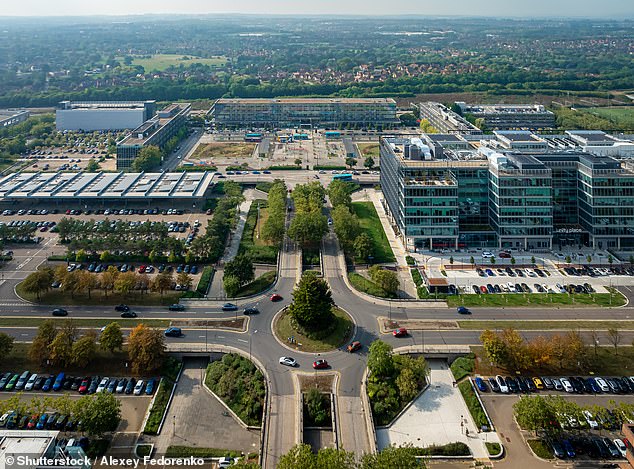
What’s the area like: One of the largest of Labour’s new towns, the city would see up to 40,000 homes being built as an expansion of Milton Keynes.
The council said the area would also provide jobs, schools, surgeries, community facilities, open space and ‘the other infrastructure and facilities needed to make people-friendly and healthy places’.
Three areas are being considered for expansion: a new urban neighbourhood in central Milton Keynes; the area to the east of the M1; and the area to the north.
A Government report by the new towns taskforce said a new bridge would ‘bind the northern development to the city centre’.
House prices: The average home in Milton Keynes is worth £324,887, according to the latest Land Registry data, slightly higher than a year ago when the average was £321,831.
Phil Spencer: This is a winner
Of the seven locations selected by the Government, Milton Keynes is a clear winner.
It has the right combination of location, links and lifestyle to cope with tens of thousands of new homes, so my top choice is MK all the way.
It’s a bit of a stretch to call Milton Keynes a new town, as it’s officially a city now and it turns 60 next year.
Begun in 1967, it was one of the last of England’s post-war new towns. It’s arguably the most successful, as the planners who designed it learnt lessons from the predecessors built in the 1940s and 50s.
Milton Keynes is famously built on a grid system like American cities, and it’s a breeze to get around as long you don’t mind roundabouts.
It also has lots of cycle paths, green spaces and lakes threaded through the residential areas, so its existing infrastructure is well placed to handle the challenge of another 40,000 homes being built.
Its location in Buckinghamshire is ideal too. It’s within easy commuting distance of London, and the coming years should see thousands of new jobs created in MK and the surrounding area too.
New Towns work best when jobs and homes are created at the same time; it’s not enough to stick up thousands of homes and assume residents will commute to where the work is.
The Government’s vision for MK is to improve the city’s existing transport system while also making it attractive to businesses, and on balance I think it’s well placed to succeed.