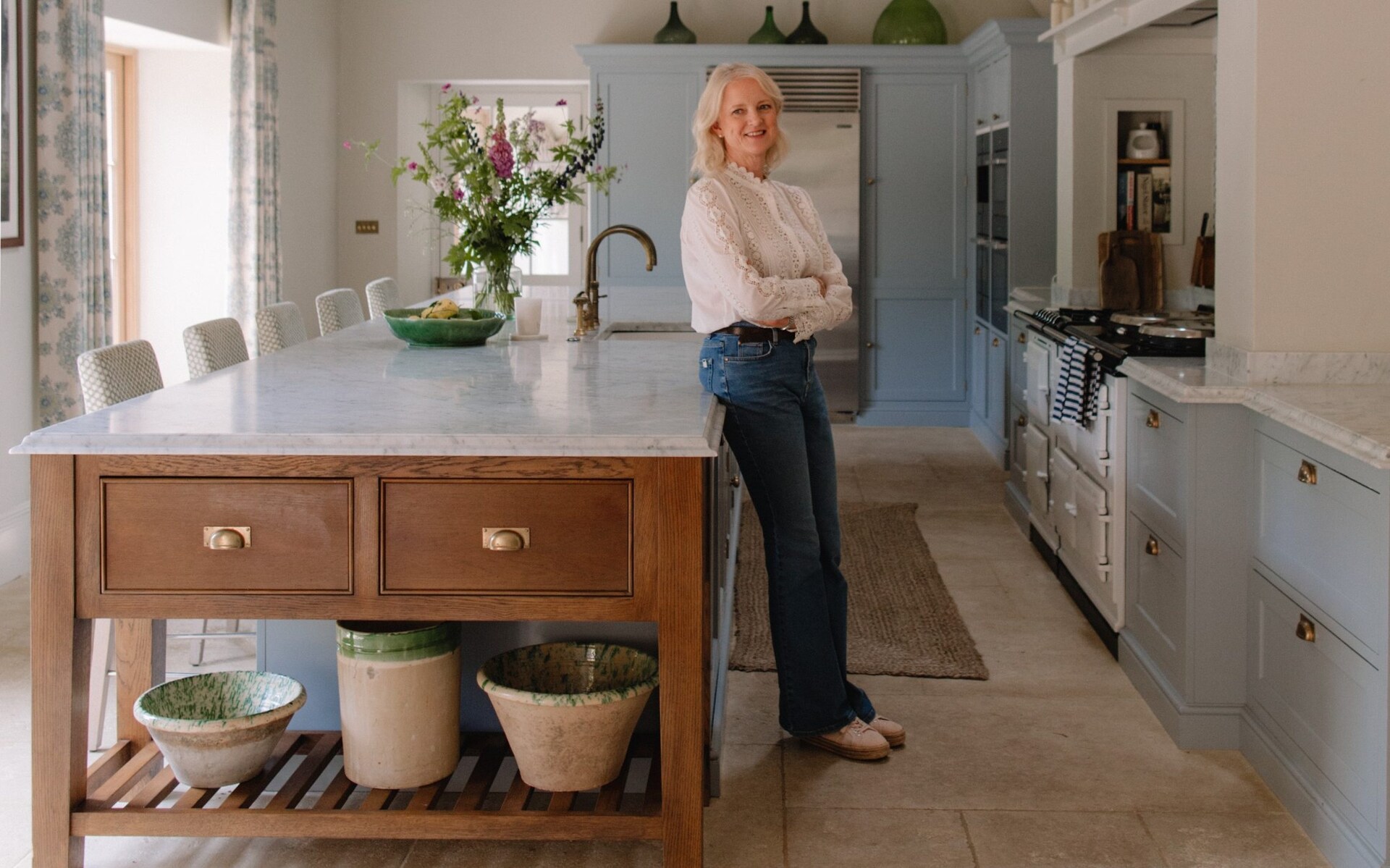
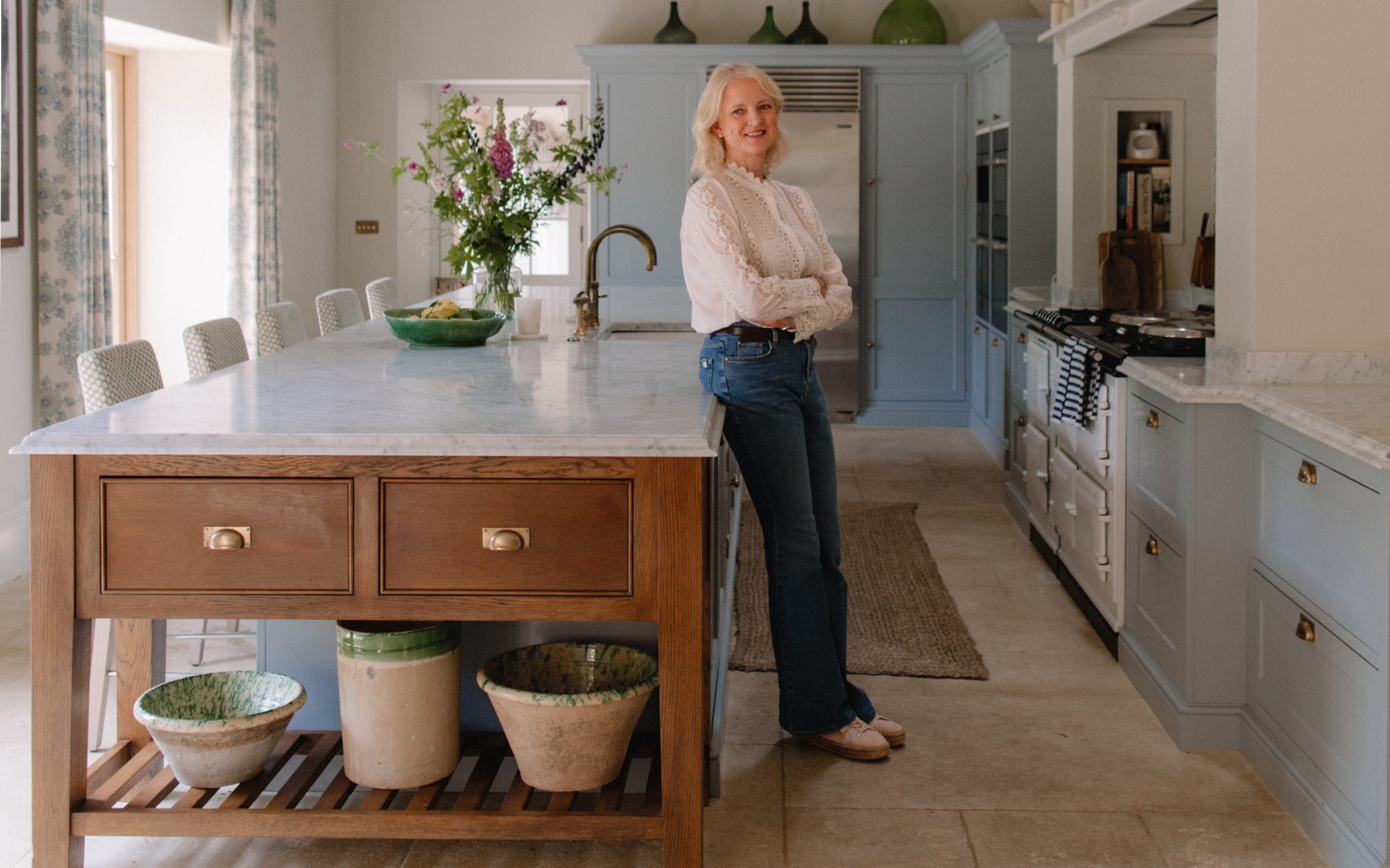
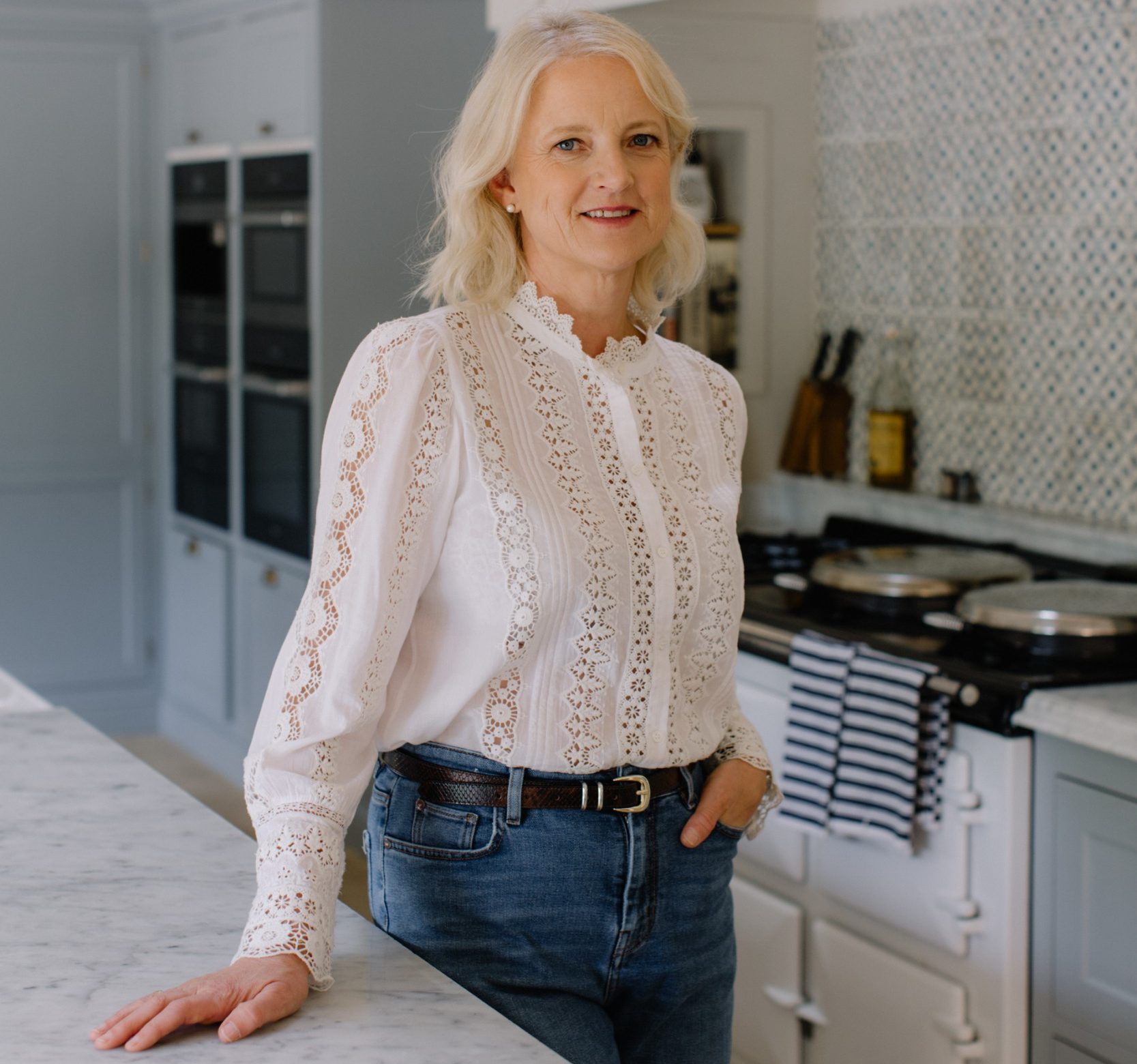
“Planning a kitchen can be overwhelming,” admits interior designer Emma Sims-Hilditch. For anyone who has attempted the task, this might feel like an understatement. But they are strong words, given Sims-Hilditch is the creative director of interior design firm Sims Hilditch and creative founder of the furniture company Neptune, both of which are known, among other things, for immaculately designed kitchens.
We asked Sims-Hilditch for her expert tips on each element of kitchen design, from layout to hardware. “There is a lot of cautionary advice here, but I don’t want to sound gloomy,” she says. “If you can avoid the pitfalls, it can be a fun, creative process that gives you a beautiful, sustainable kitchen that works for your way of life.”
Preparation
“Before you start planning a kitchen, write a brief,” advises Sims-Hilditch. Ask yourself: how do you want the space to feel and function? Why are you making changes? What are your likes and dislikes? “Be as thorough as possible. No detail is too small.” She also recommends making a precise list of what you need to store, from plates and platters to equipment such as blenders, food processors and bread makers. It may seem time-consuming, but it will result in a design that suits the way you live and cook. If, like Sims-Hilditch, you love herbal tea, add a dedicated tea drawer to the wish list. Likewise, if you have a penchant for vintage linen tablecloths, make sure there is room to store your collection.
Conversely, now is the time to be ruthless and cull those things that you no longer use. That pasta maker that has been gathering dust; pass it on to a friend or a charity shop. This might be the moment to upgrade, too. “Rather than have eight old pans, why not invest in four that are really good quality?” Sims-Hilditch suggests.
Then set a budget, being mindful of costs beyond the cabinetry, including plumbing, lighting and electrics. Sims-Hilditch finds that clients often underestimate the expense of worktops and appliances. It’s important to be realistic, to avoid running out of money before the kitchen is complete.
Layout
“The floor plan is everything. It’s the one thing you can’t change, and if you get it wrong, you’ll regret it every day,” says Sims-Hilditch.
According to the “golden triangle” theory, the cooker, refrigerator and sink should form three points of a triangle. This design principle was developed in the 1940s and is considered outdated by some – but for Sims-Hilditch, it remains a useful way to minimise unnecessary walking between stations.
She likes the dishwasher in the kitchen island (if there is one), along with the sink and the bins, with the cooker directly opposite, but concedes it won’t suit everyone. “If you like the theatre of cooking, you might choose to have the hob on the island, or perhaps you want it to be a spotless area to sit and enjoy a glass of wine. That is why the initial brief is so important.”
Another of Sims-Hilditch’s tips is to place the dishwasher next to the cutlery and crockery drawers, and within easy reach of the dining table, to make the quotidian task of unloading and loading as fuss-free as possible. Likewise, drawers of pots and pans should be adjacent to the cooker.
Finally, avoid pinch points. “For example, make sure that if the fridge door is open, then you can easily walk past.” This will ensure the kitchen has a good flow and is always easy to move around.
Cabinets
For Sims-Hilditch, the most important element of the kitchen is the cabinetry. “The budget option is often a false economy, as it will need replacing sooner,” she says. “Whether you use a brand or a local carpenter, get the best you can afford.”
A good way to assess the merit of a cabinet is by the style of construction. “The traditional way to make cabinets is with a frame for the door, and this remains a sign of quality,” notes Sims-Hilditch. “It is a classic design, which is rigid and will last a long time.” She strongly recommends timber doors, as they are easy to repair and can be repainted for an easy update. “We’ve had our kitchen for 20 years, and I think we’ve repainted it 15 times. It’s a fun way to make it feel totally different. You can also freshen things up by just painting the island.”
Generally, she favours drawers over cupboards – “they are so much more practical” – but makes an exception for a larder cupboard: “It’s the perfect place to store all your dry goods, or for a coffee-making-cum-breakfast station.”
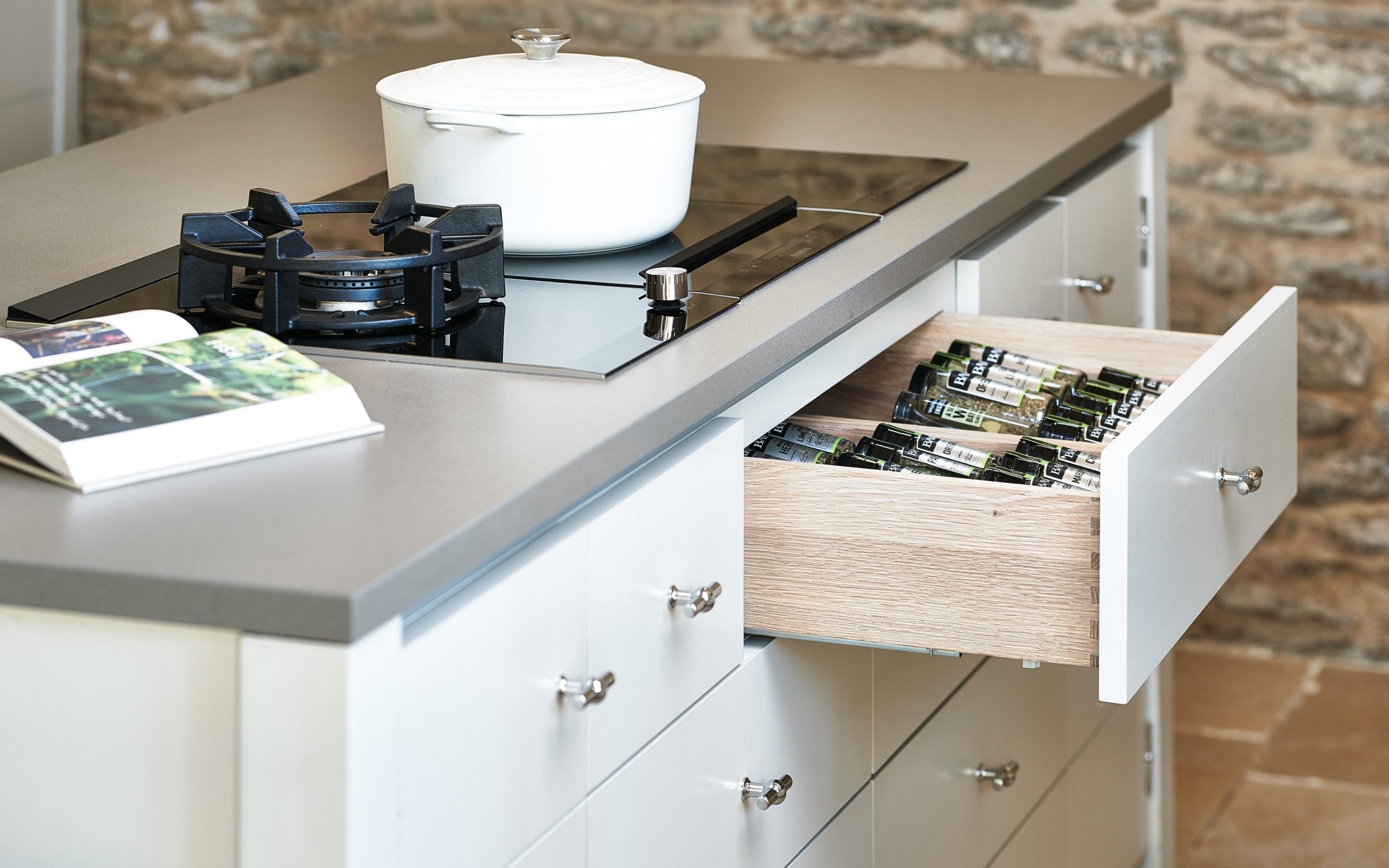
A cupboard of this sort, which can also be made by converting a free-standing piece of furniture, such as an antique wardrobe, can eliminate the need for wall cabinets. But Sims-Hilditch cautions against replacing them with open shelves, which, she says, get greasy and dusty within a couple of weeks.
Decoration
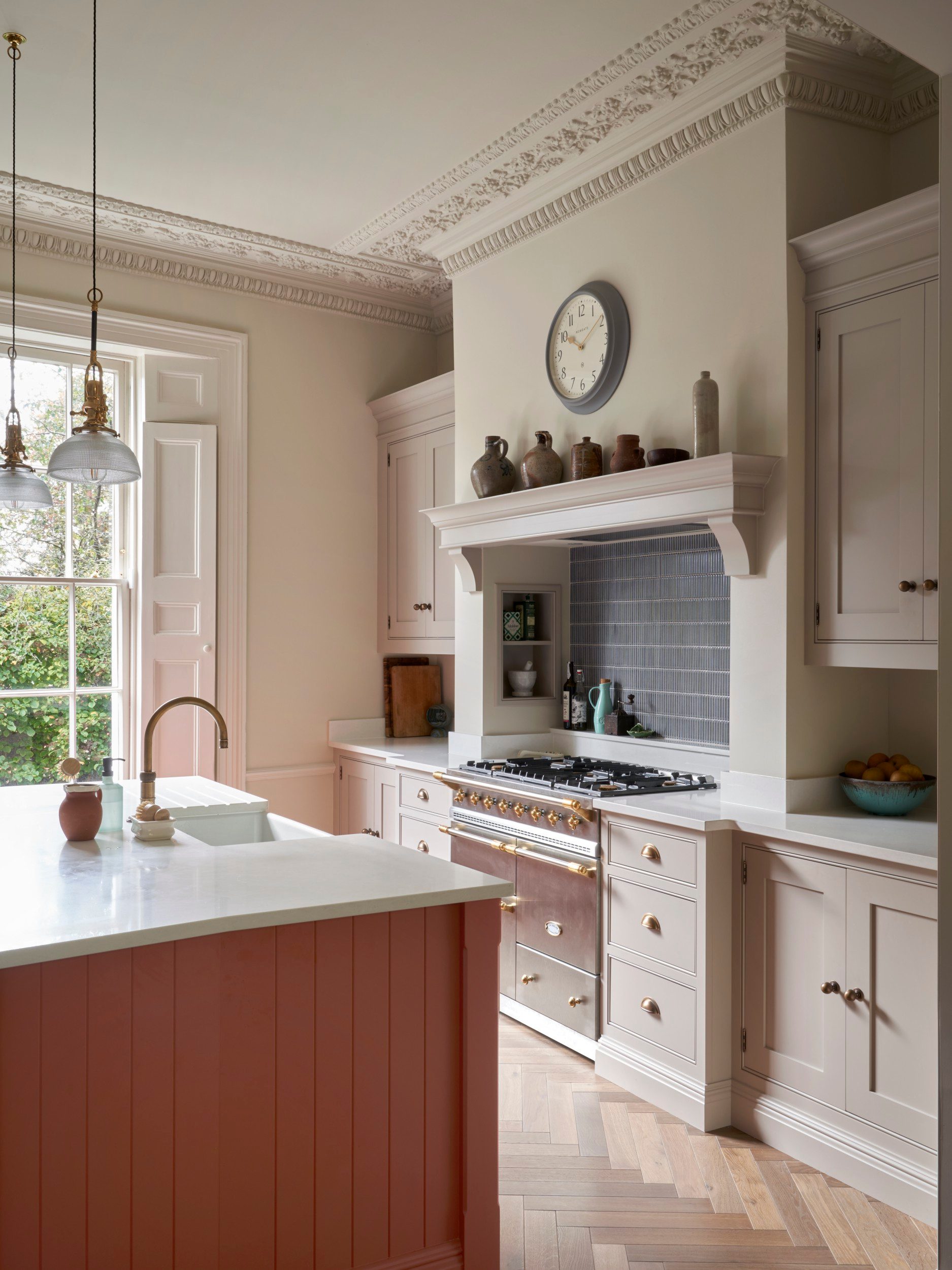
“People often make the kitchen a sterile, white box with downlights in the ceiling, when it should be as cosy and welcoming as any other room in the house,” says Sims-Hilditch. Colour is an easy way to soften the space and add interest. She recommends something bold, such as a green, brown or red, that will pop against neutral walls.
Alternatively, try a combination of tongue-and-groove panelling and wallpaper, or add a tiled splashback behind the cooker. Sims-Hilditch’s favourite supplier is Marlborough Tiles, which is known for its range of hand-painted Delft tiles.
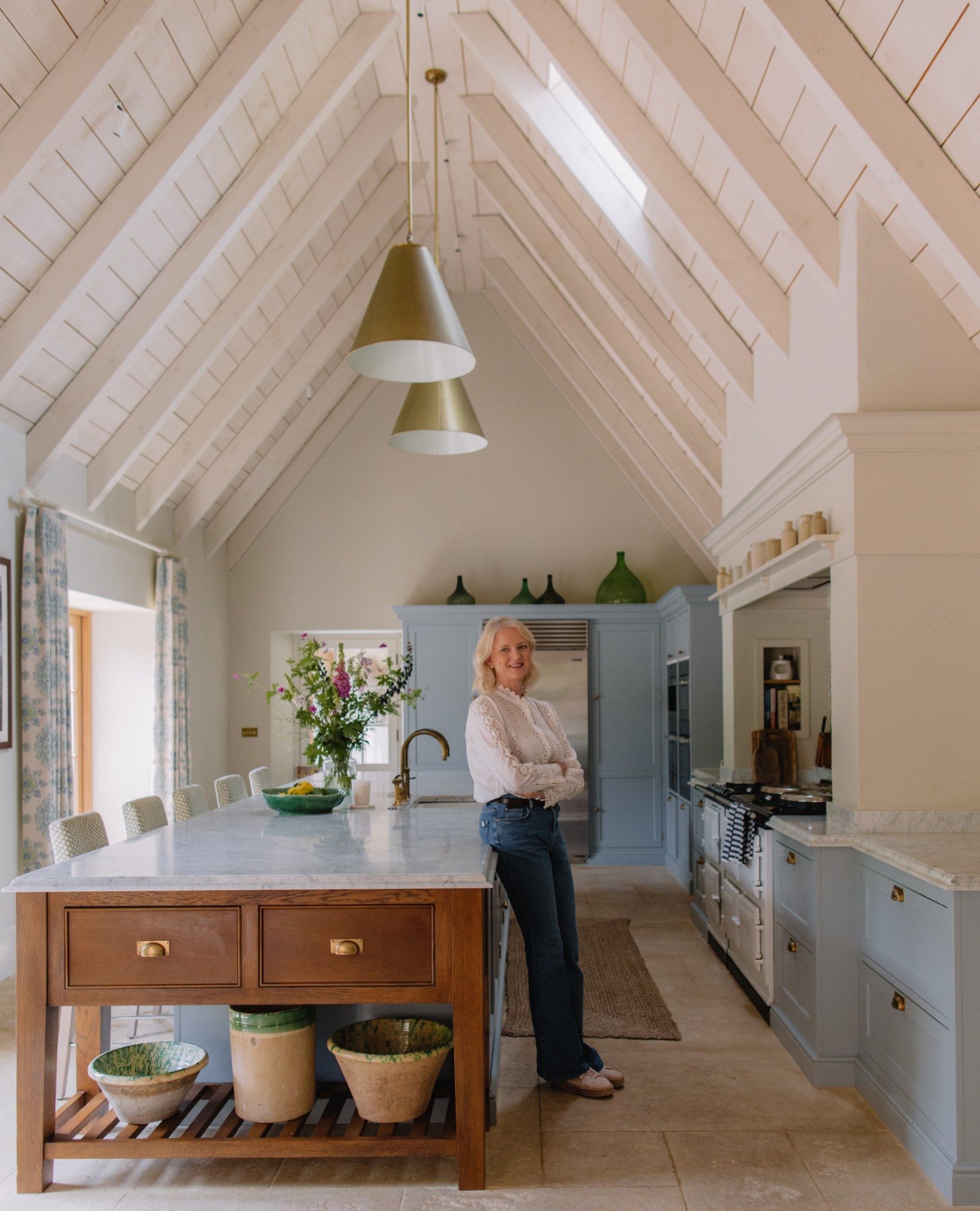
Emma likes to add curtains or blinds with an interesting texture or pattern. “If you have a bench seat, why not add a removable, washable cover? You could have one in a wool for winter and a stripe for summer.”
For lighting, combine large decorative pendant lights above the island or dining table with wall and table lights for a layered effect. Ideally, there would be settings for different times of day. If that isn’t possible, ensure pendants and wall lights are on dimmers, so that it’s easy to change the mood.
Flooring
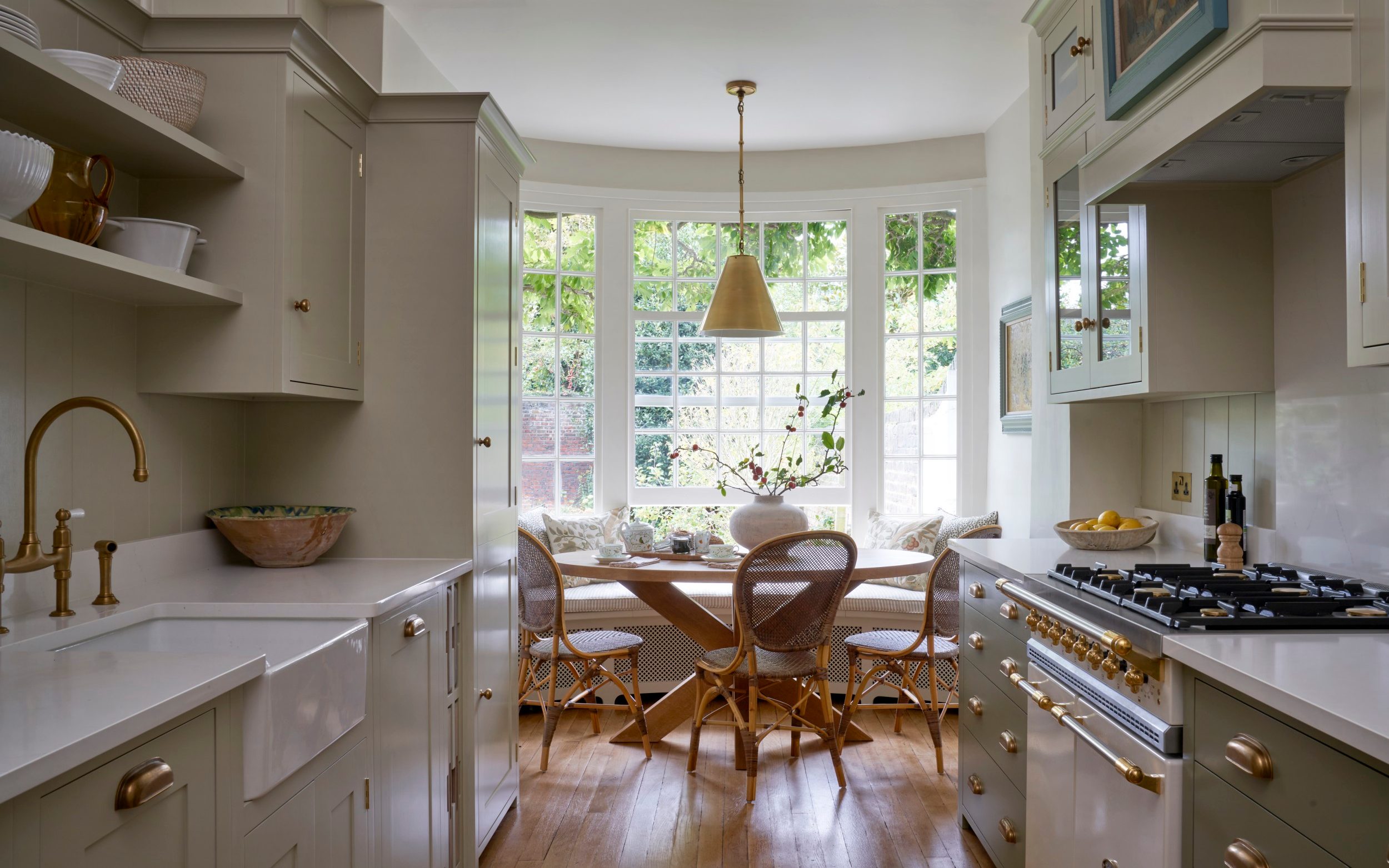
Timber is Sims-Hilditch’s preferred flooring. “Although it doesn’t conduct heat as well as tiles or stone, it’s still very good, and timber is so much kinder on the feet and the back,” she points out. If you have underfloor heating, the timber will need to be engineered. Havwoods and Hakwood are both good sources.
“Keep in mind, timber will change colour over time, and also stain,” says Sims-Hilditch. “One way to handle this is to add a section of stone flooring between the island and the cooker; it is very practical, and the variation in materials looks lovely.”
Appliances
Appliances are one element of the kitchen where you can save money: “The mid-range brands, such as Bosch, are fine.” However, Sims-Hilditch does recommend splashing out on a boiling water tap, such as those by Quooker – “We love ours,” she says – and a retro-style coffee machine that sits on the worktop: “The built-in machines are harder to work, and trickier to fix.” Her other advice is to choose a vented extractor fan: “The ones that recirculate the air are useless.”
Worktops
“I love marble. It’s a natural, timeless material, and it has a wonderful patina,” says Sims-Hilditch. Her favourite is honed Carrara marble, which is cream with grey veining and has a subtle matt surface.
However, marble won’t be a practical choice for everyone, as it can be scratched and burned, and anything acidic (such as lemon juice or vinegar) will leave a mark. If that happens, it will cost a few hundred pounds to have the worktop gently sanded and resealed.
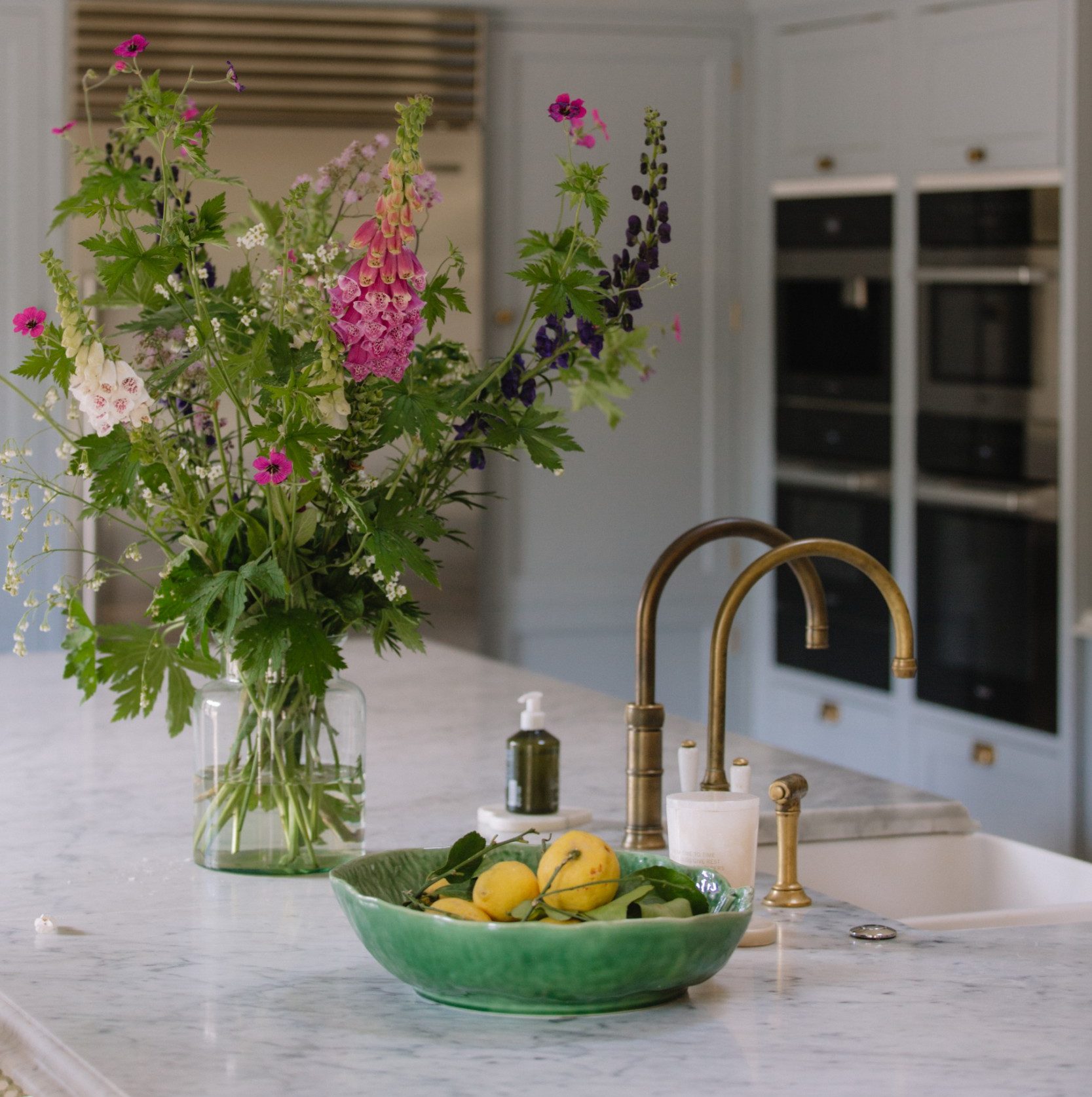
If you can’t or don’t want to be careful, a robust composite stone, such as Silestone or Caesarstone, is the answer: “These companies are getting better and better at replicating marble, and there is an excellent variety to choose from.”
Hardware
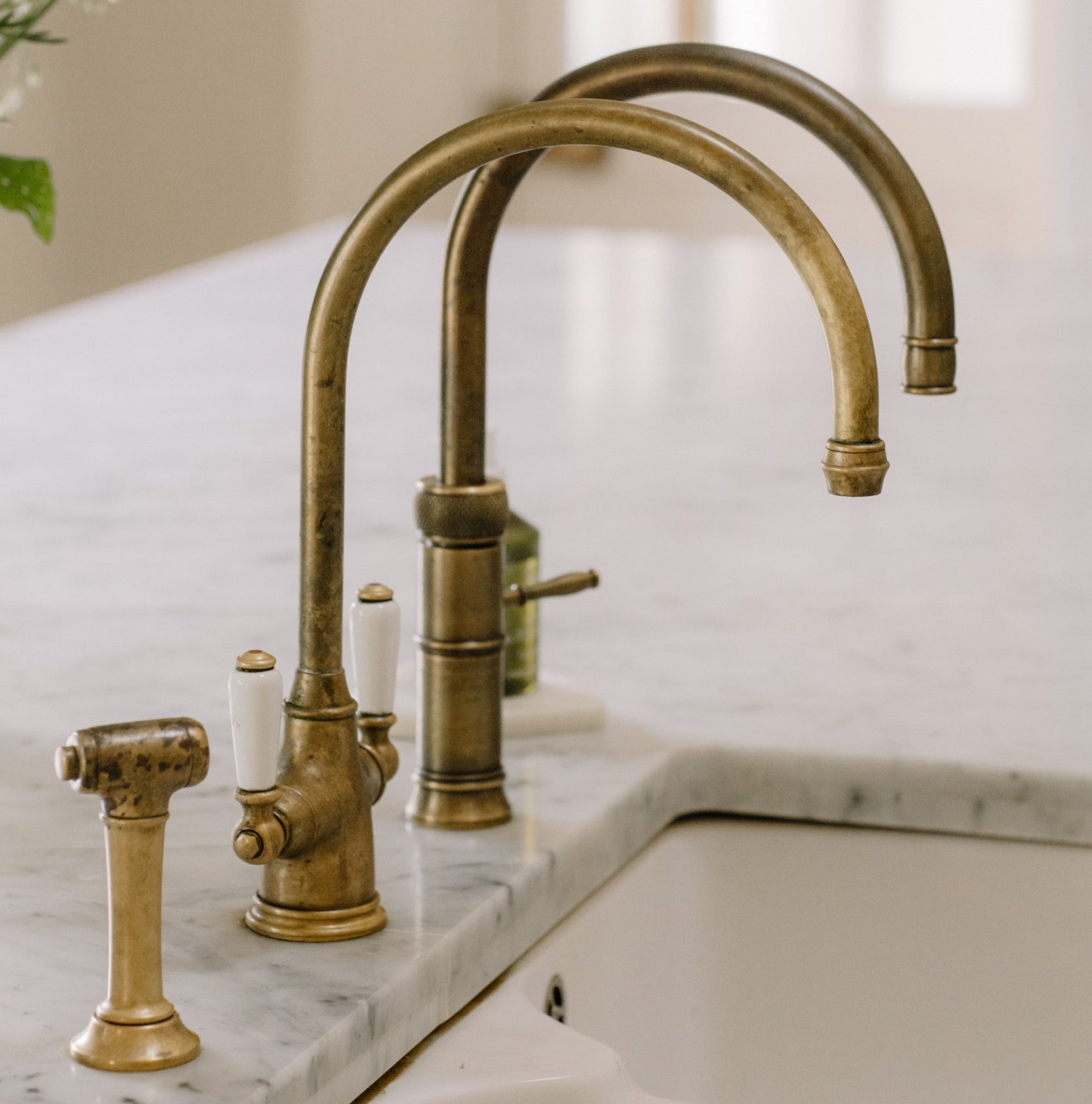
“There is no right or wrong with hardware – go with your instinct,” says Sims-Hilditch. Contrary to popular belief, she adds, not everything has to match: “Just because you have, say, a chrome tap, that doesn’t mean you have to have chrome drawer handles.” Mixing materials and styles makes the kitchen look like a room that has evolved, rather than one that has been decorated in one go. Sims-Hilditch’s favourite source is Armac Martin.
Project management
In an ideal world, your kitchen supplier or interior designer would act as project manager. If that is not possible, Sims-Hilditch’s advice is to ask your contractor for a basic timeline, including when external trades will be on site, so that you have an idea of what is going to happen and when.
Regardless, her golden rule is: don’t change your mind. “Any deviation from the original plan means spiralling budgets and unhappy contractors.” Or, to put it another way, make sure you get your brief right: “It’s all about the six ‘P’s: prior planning prevents a piss-poor performance.”
‘How To Be a Successful Interior Designer with Emma Sims-Hilditch’ is available from Create Academy
Play The Telegraph’s brilliant range of Puzzles – and feel brighter every day. Train your brain and boost your mood with PlusWord, the Mini Crossword, the fearsome Killer Sudoku and even the classic Cryptic Crossword.