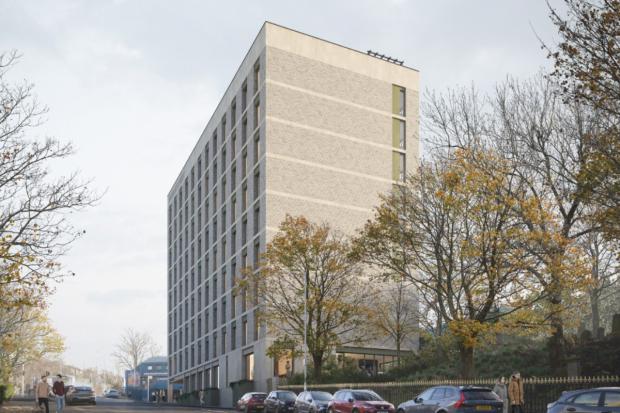
A new plan could see almost 170 studio flats for key workers built near a Glasgow hospital.
Developers have asked Glasgow City Council for permission to provide a key worker housing development on empty land at Wishart Street.
They say the project “responds to an identified demand”, particularly for NHS staff, by “providing well-located, affordable homes” within a short walking distance of the Royal Infirmary.
An application for 78 build-to-rent flats on the site — which borders the Glasgow Necropolis — was approved in 2023, but the latest plan states that the project became “financially unviable”.
A new plan could see almost 170 studio flats for key workers built near a Glasgow hospital. (Image: Supplied)
It adds the build-to-rent sector has been “significantly impacted by sustained market pressures, including sharp rises in construction and financing costs”.
Read more
-
Glasgow student flat project costing £38 million reaches huge milestone
-
Decision made on controversial plans for new student flats in Glasgow
-
Consultation launched for seven-storey flat complex nearby Royal Infirmary
-
Port Glasgow road could be named after NHS worker who died of coronavirus
The new project, from CCP KWH 3 Ltd, is a joint venture between Cedarstone Capital Partners and Pinnacle AS Holdings. Pinnacle is also working on two purpose-built key worker housing developments in England.
A new plan could see almost 170 studio flats for key workers built near a Glasgow hospital. (Image: Supplied)
The plans state the project would bring “a long-vacant brownfield site back into effective use, transforming an underutilised plot beside the Glasgow Royal Infirmary into high-quality key worker housing.
Read more
-
39 new homes to be built in North Glasgow on former office block site
-
Eight large planning updates from Glasgow this week
-
Images show new Glasgow bridge being tested ahead of grand opening
“This directly supports regeneration priorities and prevents ongoing vacancy.”
It would include 168 studios, all equipped with a small kitchen, bed space, seating area, storage, en-suite, and a ground-floor communal kitchen, dining areas, and working desks.
There would be a shared laundry area and a roof terrace with views across the Necropolis and towards Glasgow Cathedral.
The application adds that the scheme would directly support NHS recruitment and retention. It continues: “Demand for key worker accommodation in Glasgow has increased significantly in recent years, driven by pressures on NHS workforce recruitment, rising rental costs, and a shortage of affordable homes within walking distance of major hospitals.
“At the same time, existing housing options around the Royal Infirmary are limited, often unaffordable, and not well-suited to the needs of shift workers or rotational staff.
“As a result, there is a clear and growing requirement for purpose‑built key worker housing that offers secure, well‑managed, and conveniently located accommodation for hospital staff and other essential workers.”