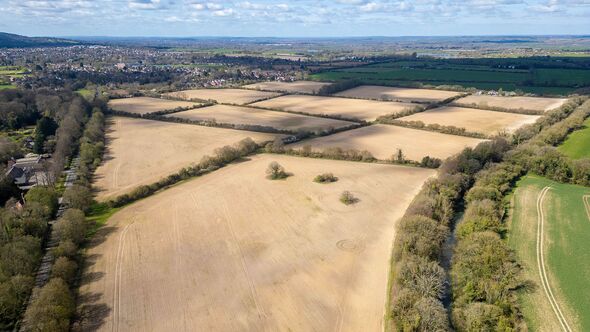
A leafy market town will be “gridlocked” by a huge housing development that experts believe will be the biggest under Labour’s rebadging of green belt land. Campaigners fear the approval of the 1,400-home Marshcroft development in Tring, Hertfordshire, will “set a dangerous precedent” and see more cherished green spaces across the country targeted by builders.
Developers Harrow Estates are hoping to build on the nearly 300-hectare site by classifying it as ‘grey belt’ – land perceived to be lower-quality green belt that can be downgraded as part of Labour reforms to hit its ambitious 1.5 million new homes pledge.
Opponents refute the site, on the edge of the Chilterns, falls under this criteria and warn it could lead to a tsunami of planning applications in rural areas.
Graham Bright, 52, chair of the Grove Fields Residents Association (GFRA) campaign group, believes the plans would cause “gridlock” on the town’s roads and create a “free-for-all” on the green belt if approved.
READ MORE: UK’s historic gardens and parks ‘under threat’ from ‘shameful’ Labour proposals
READ MORE: Cheap UK town where houses cost £131k – ‘we don’t want to live anywhere else’
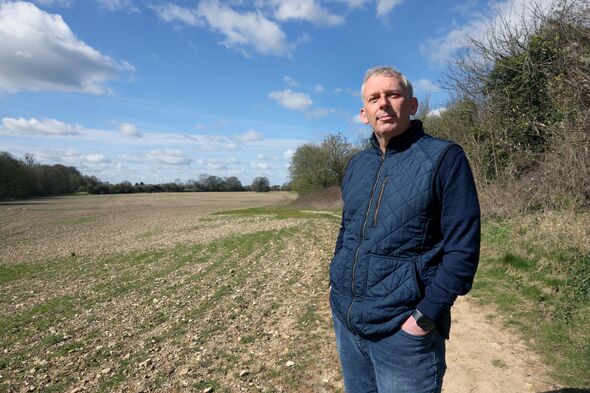
He said: “If you can convert enough space for 1,400 houses to grey belt of high agricultural farmland in the setting of the Chilterns National Landscape then most of the green belt in Dacorum could be declassified back down to grey belt.
“Therefore it would be a free-for-all and that’s what we mean by it would set a dangerous precedent because in a sense, you’d be setting the bar so low on what proportion of green belt could be declassified.”
Planning consultant Pippa Cheetham, who is supporting residents campaigning against the proposals, believes it would be “by far” the largest housing development on grey belt land in the country if accepted.
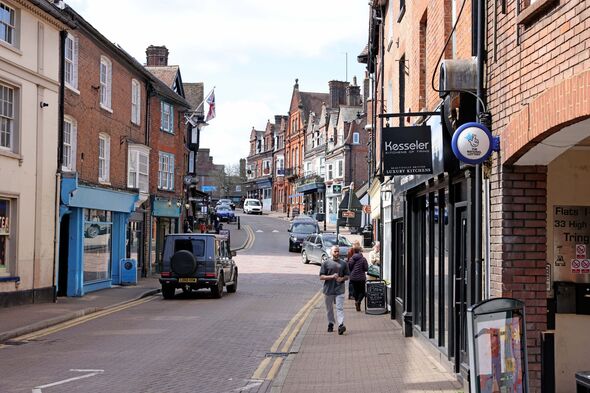
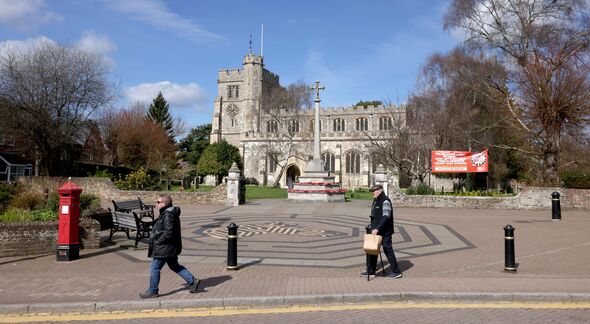
Tring is a historic market town, first recorded in The Domesday Book in 1086.
Roughly 40 minutes by train from London, it is popular with commuters and has an average house price of around £700,000.
Tring is famous for its links to the Rothschild family and has an array of independent shops, cafes and restaurants along its quaint high street.
The Marshcroft development would increase its population of around 12,000 by 28%, while additional proposed sites could see this swell further to 46%.
Critics of the Marshcroft plan argue it would cause traffic mayhem, ruin Tring’s market town charm and heap further pressure on stretched local services.
There are also concerns of the potential knock-on effect for nature as it serves as a “wildlife corridor” for animals including deer, otters and an array of birds.
The proposal was included in the Lib Dem-run Dacorum Borough Council’s 2024 local plan which acts as a guide on future developments.
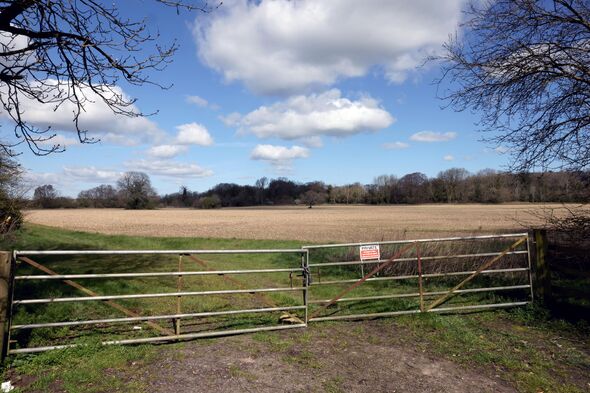
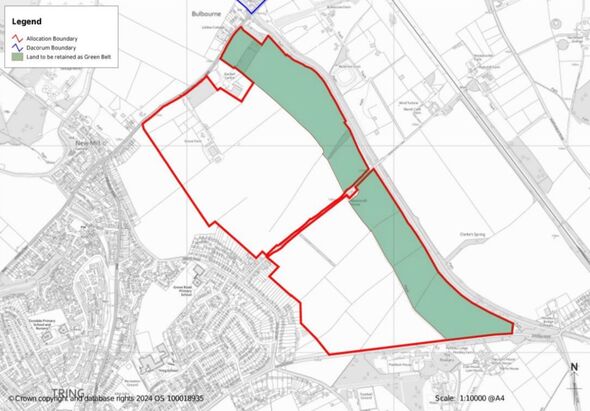
The authority previously rejected an application for the site in 2022 and an appeal was later dismissed by then-home secretary Michael Gove following an inquiry.
An examination in public of the local plan remains ongoing, but campaigners fear the latest application could be given the green-light in mid-April before this is concluded.
Mr Bright, who denies being a NIMBY and said he supports what he views as more sustainable growth in Tring, has accused the council of “U-turning” and looking to approve the application “via the back door”.
Ms Cheetham added: “We believe that what is happening with the Marshcroft application is a very clear case of a premature decision being made, because they have not yet heard from the planning inspectors about whether the growth strategy is sound or not.
“Irrespective of that, they are looking to take a planning application to committee, which would prejudge the process of the local plan.”
The plans in the picturesque market town have received much opposition, with 441 objections to the application, compared to just one letter in favour.
Concerns include potential traffic jams and impact on services like GPs and dentists.
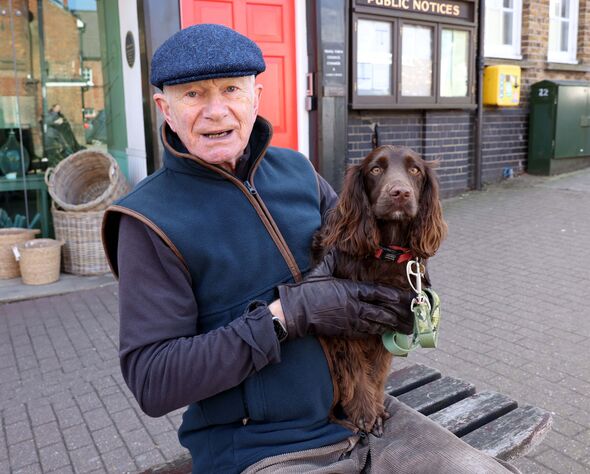
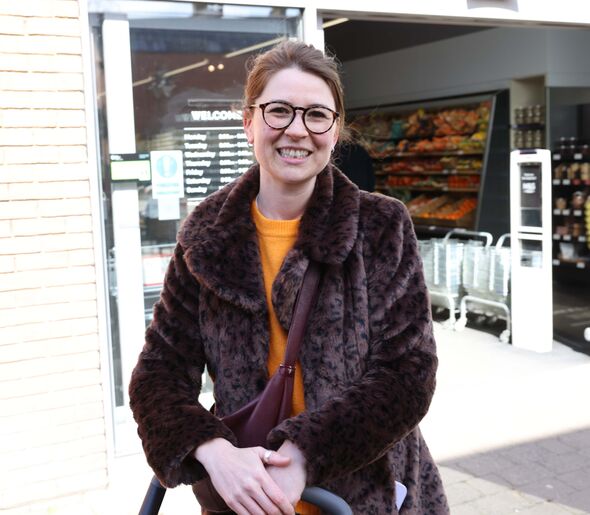
Retired Phil Hodgson, who has lived in Tring with his wife Jane for 42 years, said the town has already struggled with population growth over the years without the additional 1,400 homes.
He said: “I think it’s terrible, especially as originally the whole plan was denied.”
“It will just become a whole series of dormitories with a huge amount of queuing in every sense,” he added.
“People will get frustrated on the roads, people will get frustrated at the pharmacy, doctors, dentists. All those services that feel right at the moment will be hugely affected.”
Ms Hodgson, 77, said: “I think it’s completely shocking they’re ignoring what Michael Gove decided.”
Rachel Lake-Farnham, 35, who moved to the area from south London earlier this month with her young family, said: “We don’t want it to be crazy busy, that’s what I wanted to get away from.
“Even now, the high street can get quite busy at the weekends and to have that development would just make it really difficult I think.”
However, some business owners think the plans could be good for trade amid a drop in footfall on the high street.
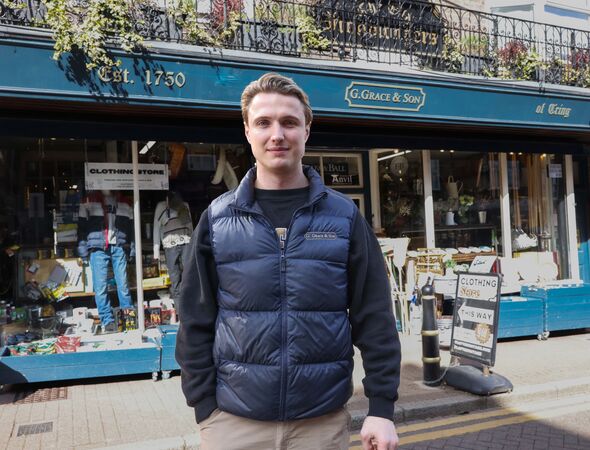

Jordan Grace, 33, owner of Tring’s oldest shop G Grace & Son which dates back to 1750, said: “Whilst I understand there is a national housing shortage, the sheer volume of houses on green belt land does concern me regarding the strain on local infrastructure and from a sustainability aspect.
“From a business point of view we would of course welcome any additional visitors to the high street but already have concerns about lack of parking.”
Dan Watkins, 38, a cobbler on the high street, added: “It sounds like a big change to Tring but personally as a business, I welcome it. I think it would be good for all of the businesses on Tring high street.”
Grey belt was introduced in December 2024 as Labour looked to rip up red-tape to accelerate housebuilding.
The Government’s definition includes land on the edge of existing places or roads, plus disused petrol stations and car parks.
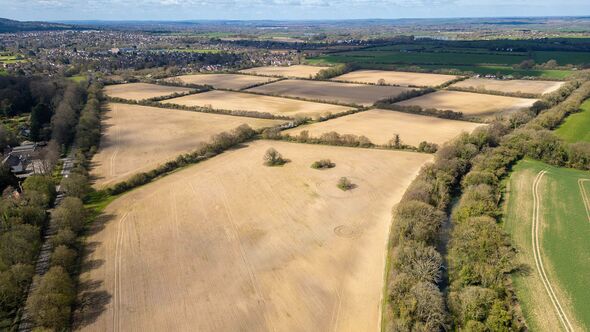
However, campaigners are concerned this is being exploited.
Abby Coften, chief executive of the Campaign to Protect Rural England (CPRE) Hertfordshire, said Labour is “enabling developers to build wherever and whatever they like”.
She said: “At CPRE Hertfordshire, we have seen an influx of so-called grey belt applications, all of which are green fields and not the disused car parks or previously developed land they originally defined grey belt land to be.
“Continuing to portray grey belt as previously developed land whilst allowing developers to cite grey belt at green field, is quite frankly dishonest.
“Of the planning applications in the Green Belt that CPRE Hertfordshire objected to in 2025, over 78% of those applications cited ‘grey belt’ with sites that would cover green belt land the equivalent of about 1,200 football pitches.
“And yet our research demonstrates there are enough brownfield sites and existing unimplemented consents to achieve even more than the Government’s 1.5 million new homes target.”
Rosie Pearson, chair of the Community Planning Alliance, said the public has been “lied to” about grey belt.
She said: “In fact, the new rules allow countryside and farmland to be developed on a huge scale.
“Our own grey belt tracker shows that the vast majority of so-called grey belt sites are meadow land, arable and pasture and we have tracked at least 14,400 acres of green belt countryside that is at risk under the rule change.
“Many of the sites would previously have been deemed inappropriate for development. Most of that (70%) is for housing, with 9% for solar and 65 for commercial uses.
“This risk to our green belts is one of the reasons why 130 communities are joining our nationwide day of action for nature, parks and green spaces on 18th April.”
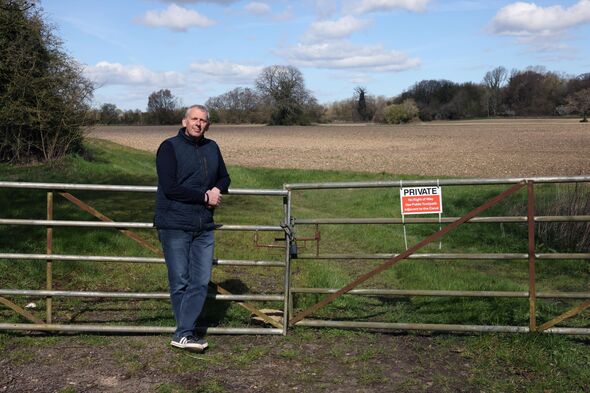
Mr Bright has told Dacorum Borough Council that the resident-funded GFRA is prepared to take the authority to court if the application is approved before planning inspectors finish their report on the local plan.
Tring Town Council has recommended the plans are refused.
A Dacorum Borough Council spokesperson confirmed the local planning authority is currently assessing the proposals.
They added: “The statutory consultation period has now concluded, and the application is being assessed accordingly. It is anticipated that the application will be presented to the Development Management Committee in April 2026.”
A Harrow Estates spokesperson said: “Our updated application retains the homes for older people, 1,000sqm of commercial space, new schools, sports and health facilities, a flexible community building, 60 hectares of open space and Suitable Alternative Natural Greenspace, while increasing affordable housing from 45% to 50%.
“There are no outstanding technical objections and its impact on local infrastructure will be mitigated, with Thames Water obliged to upgrade its systems to meet future demand.”